Flirt Poles: Play with Purpose
In my 10+ years as a dog walker, this is probably one of the games I’ve recommended most often to clients. And yet, every time I mention it, no one seems to have heard of it before.
It’s called a flirt pole, and despite how often I recommend it, it’s still surprisingly under the radar. The concept is simple, but there’s more to this game than you might think.
One of the reasons I recommend flirt poles so often is their versatility. They can provide an outlet for a dog’s natural prey drive, offer an engaging way to burn off energy and create opportunities to practise important cues when excitement levels are high. It’s a combination of physical activity and training that makes this game particularly worthwhile.
And honestly, it’s one of those games that can look ridiculously simple until you see a dog try it for the first time. Suddenly, that bit of fluff on a string becomes their entire career. They’re not playing anymore; they’re on the clock, and that lure isn’t going to chase itself.
What Is a Flirt Pole?
A flirt pole is a long pole with a cord attached to one end and a toy or lure at the other. You hold it like a fishing rod, guiding the lure along the ground to encourage your dog to chase it, much like a cat chasing a toy on a string.
It might not sound like much, but for dogs that love chasing moving objects, the game can be incredibly exciting. In fact, some dogs get so caught up in the chase that they start jumping up or barking with excitement. This is where training comes in.
To keep the game under control, dogs can learn cues such as “Stay”, “Get it”, “Leave it” and “Drop it”. The best part is that they don’t need to have mastered these commands before you introduce the game. With a little patience, the flirt pole itself can become a way to practise and strengthen these skills, helping your dog learn to manage their excitement while still having fun.
Which Dogs Can Benefit from a Flirt Pole?
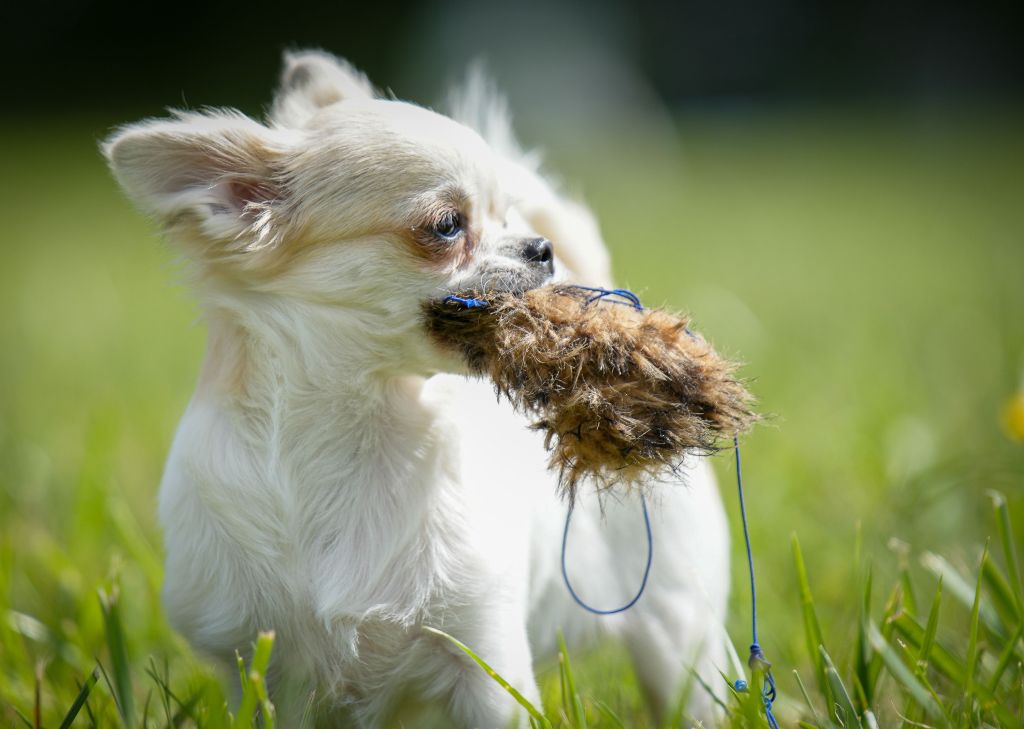
Honestly? More dogs than you might think. If your dog loves chasing things, has enough energy to power a small village or occasionally acts as though you’ve personally offended them by asking for their attention, a flirt pole might be right up your street.
Dogs with a strong prey drive
Does your dog spot a squirrel and suddenly forget that you exist? You could be holding a whole roast chicken, and the rodent with the fluffy tail would still win.
Some dogs have an incredibly strong instinct to chase moving things. Squirrels, rabbits, birds, the neighbour’s cat… anything that moves can trigger that instinct, and once they’re locked on, you might as well be talking to a brick wall.
A flirt pole gives these dogs an outlet for that urge to chase. Instead of constantly fighting against their instincts, you can use that motivation to engage them in a game and practise some useful training skills along the way.
Whippets, Greyhounds, Border Collies and plenty of terriers may particularly enjoy it, but you don’t need a pedigree certificate to qualify. If your dog would chase something just because it’s moving, there’s a chance they’ll love it.
High-energy dogs that never seem to bloody tire
You know the ones. You’ve walked them, thrown the ball until your arm nearly falls off, and they’re still bouncing around the house like they’ve just necked three energy drinks.
Meanwhile, you’re ready for a shower, your dinner and a long sit down. Preferably in that order, and preferably without anyone needing anything from you.
Some dogs need more than repetitive ball throwing to stay engaged. A flirt pole adds movement, anticipation and interaction, giving them something to chase that changes direction and keeps them thinking.
It can be a useful addition to walks, sniffing, training and other enrichment activities. It’s not a magical off switch, unfortunately. If only dog ownership came with one of those.
Belgian Malinois, working-line German Shepherds, Australian Shepherds and many terriers may enjoy this sort of game, although every dog is different. Some will be obsessed; others will give you a look that says, “Did you mistake me for a Retriever?”
Dogs that struggle to focus on their owners
At home, your dog can hear you open a packet of crisps from three rooms away. Outside, you could shout their name like a contestant on a reality TV show and they’d still be sniffing the same blade of grass as though they’d suddenly gone deaf.
Sound familiar?
When the world is more exciting than you are, repeating a cue louder and louder isn’t necessarily going to help. A flirt pole gives them a reason to pay attention to you.
You’re the one who starts the game, controls the movement, introduces pauses and lets them chase again. That creates opportunities to practise responding to their name, disengaging from the lure and waiting for permission to continue.
No, your dog won’t suddenly become an obedience champion overnight. But you can start teaching them that listening to you doesn’t mean the fun has to end.
Dogs whose owners can’t be arsed to run
Yes, you heard me correctly. No, I’m not trying to be rude. I’m just being honest, and if you fall into this category, you’ll be pleased to know that I fall into this category too.
Don’t get me wrong. I love my job and all my doggy clients, and I can happily walk all day long. But running? I ain’t built for running. Sorry, I’m fit, but I’m not that fit.
Some people get a dog because they want a running buddy. They dream of long hikes, morning jogs and adventures in the great outdoors. Good for them. Genuinely.
But not everyone got a dog to become an athlete. Maybe you wanted a walking companion, not a personal trainer with four legs and absolutely no concept of a rest day.
Perhaps your kids have boundless energy to play with the dog for hours, while you’re ready for a lie-down after twenty minutes. Maybe it’s your girlfriend’s dog, and you’ve recently discovered that her idea of a relaxing weekend involves a dog that could probably outrun a small horse.
Or perhaps your dog belongs to a previous version of you. The one before kids, when you had free time, boundless energy and could spontaneously go for a long walk without packing bags for the kids or arranging childcare.
And sometimes, let’s be honest, you simply didn’t realise what you were getting into when you adopted them. That adorable puppy has grown into a dog with the energy of a toddler who’s been given a bucket of sweets.
Whatever the reason, if your dog’s energy levels don’t quite match yours, a flirt pole lets you enjoy a game together without having to run alongside them until you both need medical attention.
You can stay relatively stationary while your dog does most of the chasing. You still need to move the pole and keep the game safe, but you don’t have to turn every play session into a fitness class.
It’s not about replacing walks or avoiding your dog’s exercise needs. It’s about finding enjoyable ways to meet those needs that work for both of you.
How Can a Flirt Pole Help with Training?
Remember those commands I mentioned earlier? They’re about so much more than following instructions. Practising them helps your dog develop important skills that won’t stay confined to the game but will come in handy throughout their life.
Impulse control
Your dog learns that the game doesn’t start simply because they want it to. You can keep the lure out of reach and only lower it when your dog can wait calmly next to you.
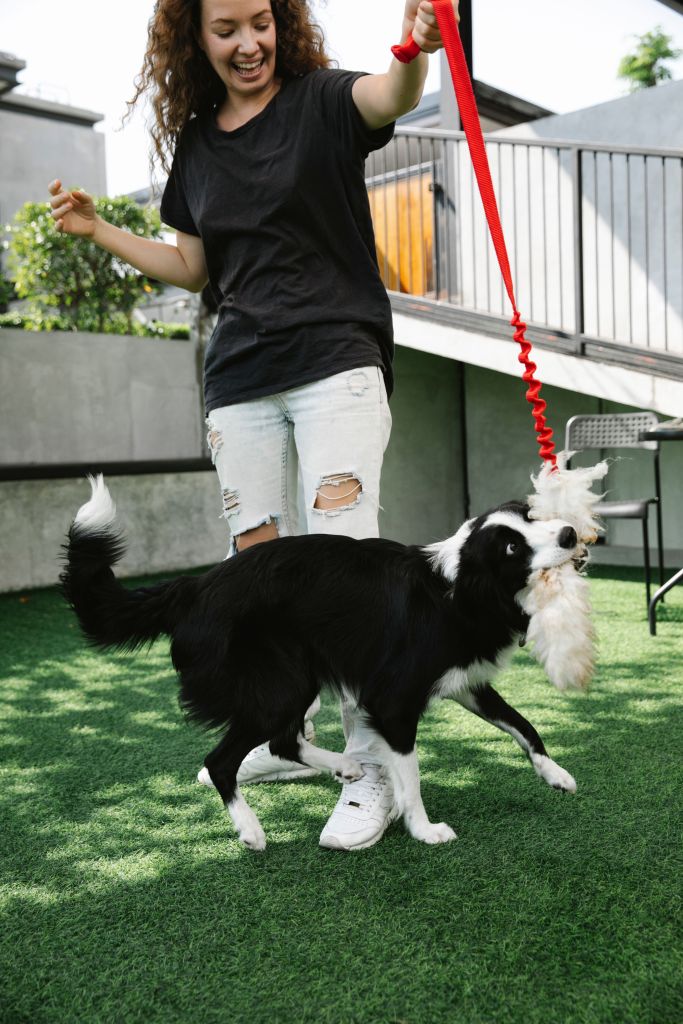
You’re probably laughing at me already, thinking that’ll never happen. But hear me out. Keep the lure up until your dog stops jumping and starts watching it instead. Then slowly lower it. If they move towards it, the lure goes back up. If they stay still, it goes down a little further. Once they’re waiting calmly, give your cue and let the chase begin.
The key is to repeat this as many times as needed. You’re teaching your dog that patience is what gets the game started, not jumping around like the maniac they uaually are.
Disengaging from the lure
For dogs that become intensely focused on moving objects, learning to disengage can be valuable.
You can briefly pause the game by letting the lure flop onto the grass, or allowing your dog to hold it in their mouth. When they’ve had a moment and their excitement starts to settle, encourage them to turn towards you. Reward that moment of connection, then resume playing.
With practice, your dog learns that looking away from the lure doesn’t mean the fun has ended. And as time goes on, you’ll be able to ask for their attention earlier and earlier, even in the middle of a chase.
How to Play Safely
Flirt poles can be exciting, so it’s important to keep the game appropriate for your dog’s age, health and physical ability.
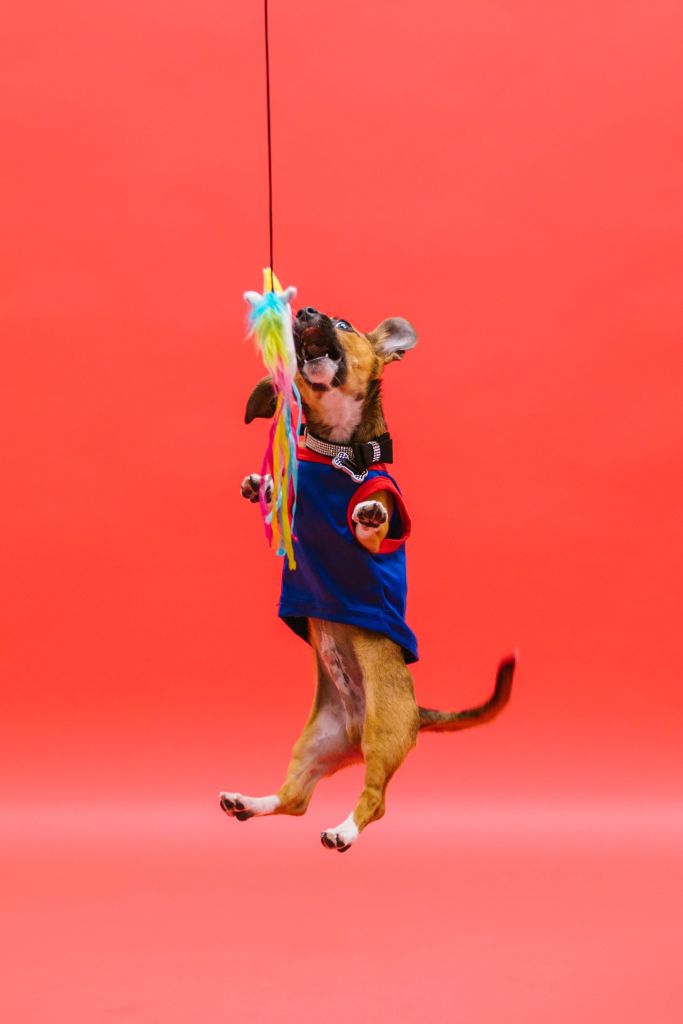
- Keep the lure low: Encourage chasing along the ground rather than repeated jumping or twisting in the air. Your dog may think they’re a superhero, but let’s keep all four paws reasonably close to the ground.
- Avoid sudden turns: Fast changes of direction can put unnecessary strain on joints, especially when a dog is moving at speed. Excitement makes dogs wonderfully committed to a game, but not necessarily very sensible about how they play it.
- Keep sessions short: A few minutes of focused play may be enough. Stop before your dog becomes exhausted or overly aroused, even if they’re giving you that look that says you’re clearly ruining the best day of their life.
- Let your dog catch the lure: Don’t make it an endless chase. Imagine sprinting after an ice cream van that never stops — not much fun, is it? Successful catches help keep the game rewarding.
- Build in breaks: Practise short pauses and give your dog time to settle between bursts of play. You can use these moments to practise those cues, too, rather than treating every pause as an inconvenient interruption.
- Choose a suitable space: Good footing and enough room to move are essential. Check for obstacles and keep your dog away from roads and other hazards before you unleash their inner hunting machine.
- Consider your dog’s health: Puppies, older dogs and dogs with joint problems or previous injuries may need a gentler approach. If you’re unsure whether the game is suitable, check with your vet before turning your garden into a miniature hunting ground.
If your dog becomes frustrated, starts grabbing at your hands or the pole, or struggles to settle after playing, reduce the intensity and take a break. The game should be enjoyable and manageable for both of you.
Need a Hand with Your Dog?
If your dog could do with a little extra help burning off energy or working on their focus, that’s where I come in. Whether it’s dog walking or training you’re after, you can find out more about my services at Let’s Bork.

