Professional Dog Walker Etiquette: The Unwritten Rules of a Good Walk 🐾
In my 10 years of experience as a dog walker, I can confidently say that I have heard every client complain at least once about another dog owner or professional dog walker.
Whether they have witnessed the behaviour from a distance or had a close encounter themselves, the experience has left a lasting bad impression. To the point that some clients will avoid certain routes or only go out at specific times of the day.
As a professional dog walker, this is incredibly sad to hear. Walks should be about having a good time with your dogs, not worrying about an unpleasant situation you might encounter.
It’s important to remember that everyone should behave responsibly when they’re out walking, but it’s even more important when you’re walking dogs professionally.
You’re sharing public spaces with other dog owners, walkers, cyclists, families and wildlife, and good etiquette should be part of your service standards.
There aren’t always written rules for every situation, but there are some simple things that can make walks easier, safer and more enjoyable for everyone.
Here is a short list of the etiquette rules I have implemented over the years. Some have been there from the beginning, while others have developed with experience.
My Dog Walking Etiquette
1. Check the local rules
Don’t assume every park, woodland or open space has the same rules.
Check the signs when you arrive and, where appropriate, look online too. There may be restrictions on where dogs can go, whether they need to be on lead, seasonal restrictions or rules that apply specifically to professional dog walkers.
And don’t forget parking rules. Park considerately and only where you’re allowed to.
2. Give dogs arriving by car some space
Before opening the doors, have a look around.
If someone is trying to get their dog into their car, it can be helpful to wait before unloading yours. A group of excited dogs getting out of a vehicle can easily distract another dog that is trying to get calmly into theirs.
Likewise, a group of dogs getting out of the car will be calmer and easier to manage if they aren’t immediately trying to drag you towards another dog to say hello.
A few seconds of patience can make the situation much easier for everyone.
3. Choose the walk according to the dogs you’re walking
Plan your routes strategically.
If you’re walking a reactive or nervous dog, an open space can give you much more room to see what’s coming and create distance when needed. It allows you to spot potential triggers earlier and give your dog the space they need.
If a dog struggles around other dogs, narrow paths and busy areas may make things unnecessarily difficult.
4. Pick up every poo — even in the woods
Woodland doesn’t make dog poo disappear, and there is no such thing as the dog poo fairy.
If you’re walking several dogs and keeping track of who has been can be difficult, keeping them on lead until they’ve had the opportunity to toilet can make things much easier.
Pick up after every dog, and don’t leave bags hanging from trees or at the side of the path. They can easily be forgotten or left behind if you suddenly need to change your plans and take a different route home.
If you struggle to hold multiple leads and poo bags, there are plenty of poo bag holders available, or you can use a dog-doo tube to store used bags until you find a bin.
Pro tip: A dog-doo tube is sealed, so it traps the smell. If there are no bins where you’re walking and you need to drive home afterwards, it can save your car from smelling of dog waste!
5. Don’t assume everyone wants to say hello
Your dog may be incredibly friendly. That doesn’t mean everyone wants them running up to them.
Some people may be nervous around dogs, have a young child with them, or simply not want to interact.
6. Give other dogs space
If you see another dog approaching, be prepared to put your dog or dogs on lead if needed.
Give nervous, reactive, elderly or otherwise uncomfortable dogs the space they need.
And if someone moves to the side of the path, changes direction or is clearly trying to create some distance, let them.
You don’t need to know why someone wants space. Just give it to them.
7. Good recall is part of good etiquette
A reliable recall gives dogs more freedom, but being off lead doesn’t mean they should run up to every dog or person they see.
Calling your dog back when you’re approaching someone else is often the considerate thing to do.
And if your dog’s recall isn’t reliable yet, keeping them on lead while you’re working on it is the sensible option.
8. Talk to people instead of guessing
Sometimes the easiest way to avoid an awkward situation is simply to communicate.
If you’re approaching someone in a narrow space, ask if they’re happy for you to pass, or ask if they can give you a moment to get back to a wider area.
Likewise, if you need someone to wait while you get your dogs through a narrow section, just ask.
Most people are perfectly happy to help when they understand what you need, and a quick conversation can prevent unnecessary stress for both dogs and people.
9. Remember that you’re representing your business
When you’re walking several dogs, people notice.
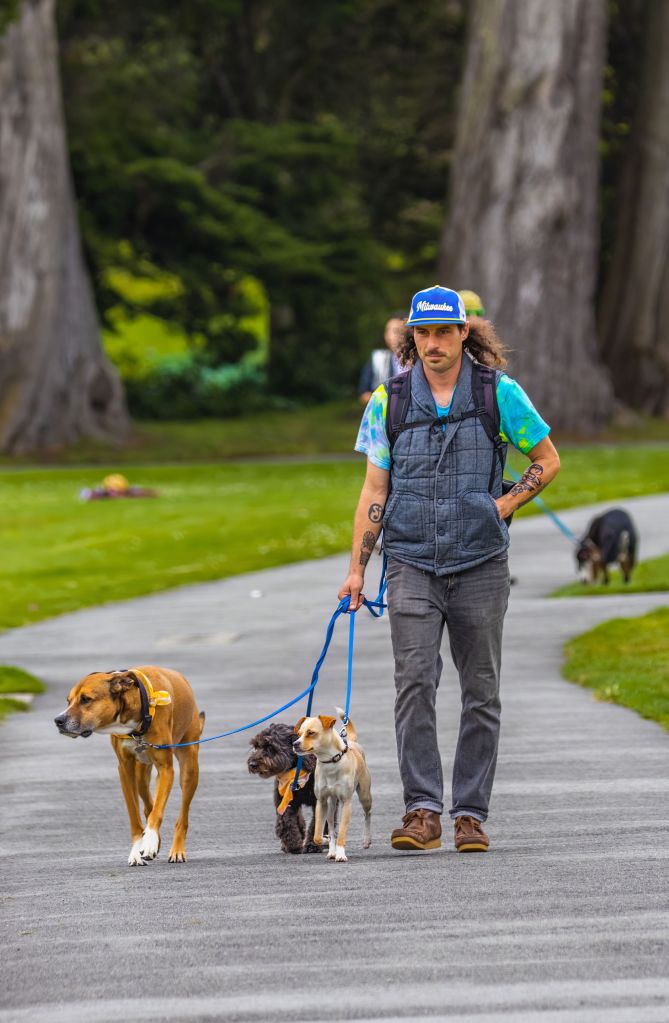
Following local rules, picking up after your dogs, parking considerately, giving people space and managing your dogs calmly all contribute to how professional dog walking is perceived.
Being professional and considerate isn’t just about your own clients. It’s also about building trust with the wider public and showing that professional dog walkers can share these spaces responsibly.
Want to know a little more about Let’s Bork? You can find out more on my website.

