🐕🦺Dog Training Tips Of December: How To Speak Dog
Dogs can understand us better than we can understand them. Our body language is, for the most part, very clear to them — they’re exceptional readers. Over thousands of years of living alongside humans, this skill has been refined through coevolution and even selective breeding.
Dogs have become so good at reading us that they’re the only animals, besides primates, who understand what pointing means. Try it — if you point to a spot on the floor, your dog will likely follow your hand to see what you’re showing them.

Misunderstandings Go Both Ways
While dogs read our signals remarkably well, we’re not nearly as good at reading theirs. A common example is the “guilty” dog video — where a dog looks ashamed after their owner discovers a destroyed sofa. What we interpret as guilt is actually fear. The dog notices the anger in their owner’s voice and responds by making themselves look smaller and less threatening.
If this happens often, the dog might start showing this “guilty” look even before the owner discovers the damage, because they’ve learned that their owner’s return is often followed by scolding. The dog doesn’t connect the punishment to the broken sofa — that level of reasoning is beyond them.
But don’t worry! Understanding your dog’s body language takes practice, but it’s not impossible. With time, you’ll start to pick up on their signals and strengthen your bond.
Aggressive Behaviour
- Growling: A clear warning. Don’t punish your dog for growling — it’s communication, not defiance. Scolding them teaches them to stop warning you, which can lead to “sudden” bites later. Instead, back off and give them space.
- Raised hackles (hair standing up): The dog is trying to look bigger or more intimidating.
- Lifted lip: A warning display showing teeth — it may mean “back off” or be a prelude to aggression.
- Sidelong glance: Tension or threat. The dog is assessing the situation.
- Biting: A single bite can be a warning, but repeated bites show escalating aggression.
- Direct eye contact: A sign of fear or challenge — back away slowly.
- High tail (not breed-related): A stiff, raised tail signals confidence or threat. Sometimes it even wags, but that doesn’t always mean friendliness. It also helps release scent from the anal glands — a sort of “I’m here and I’m strong” message.
Appeasing Behaviour
- Head lowered: A way to appear small and non-threatening.
- Tail tucked: Protects the anal glands from being sniffed, hiding information about health or confidence.
- Low wagging tail: Friendly but uncertain.
- Loose, relaxed wag: Friendly and confident.
- Licking another dog’s mouth: A puppy-like gesture meaning “I’m not a threat.”
- Lying on their back: Another puppy behaviour — showing trust or submission, not always an invitation for belly rubs.
- Avoiding eye contact: A peaceful gesture to prevent confrontation.
- Ears flattened: Indicates submission or nervousness.
- Freezing: The dog is unsure and trying to de-escalate a situation.
Signs of Anxiety
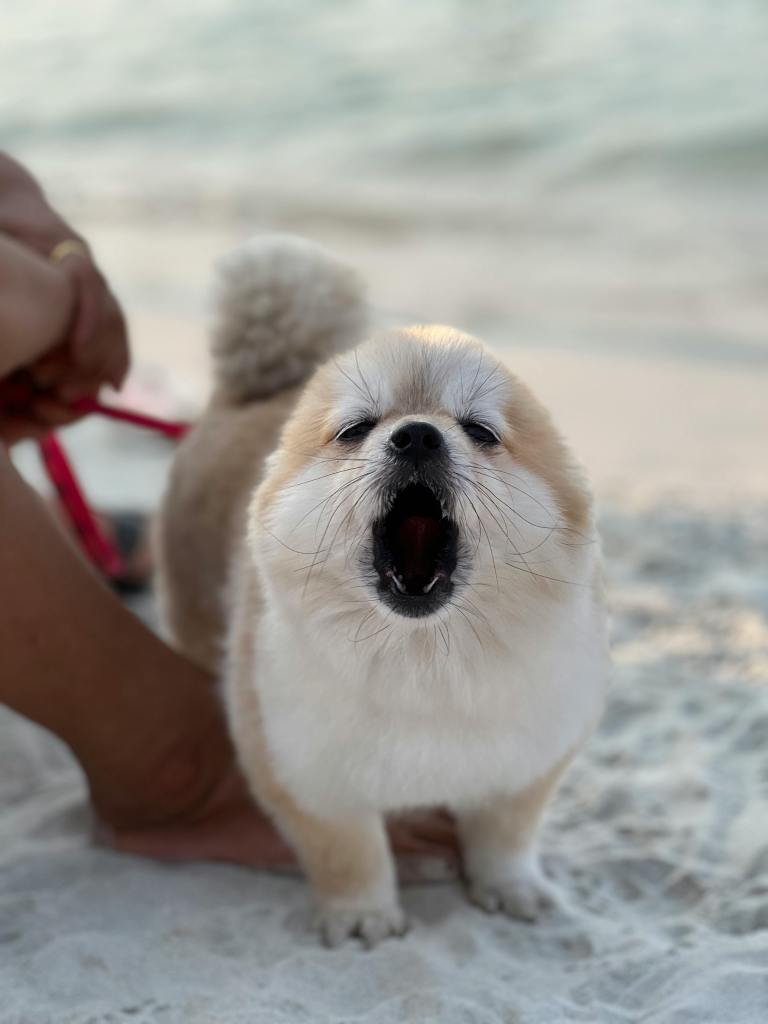
- Yawning: Not always tiredness — it can be a calming signal when a dog feels uneasy.
- Scratching or licking: Some dogs lick their lips, paws, or the floor to self-soothe when anxious.
- Chewing unusual objects: A way to release nervous energy or cope with boredom and tension.
- Jumping or pacing: Restlessness and difficulty settling can indicate stress.
- Barking or whining: Vocalising to get reassurance or express frustration.
- Following the owner everywhere: Seeking comfort and security from their trusted person.
- Tense body: A stiff posture or tucked tail shows they’re alert or uncomfortable.
Other Common Behaviours
- Play bow: The classic front-paws-down position — a clear “this is just play” signal, often repeated during rough play.
- Tail held straight out: The dog is alert or investigating something.
- Ears perked up: Focused attention on a sound or object.
Learning to read your dog’s body language takes time, but it’s one of the most rewarding parts of living with them. You’ll not only understand what they’re feeling, but also build trust and strengthen your bond.
If you ever find your dog’s behaviour confusing, you’re not alone — and that’s exactly what training is for. I offer relaxed, positive sessions that help you and your dog understand each other better.
✨ Get in touch to book a training lesson and enjoy an even stronger connection with your best friend.

