🐕🦺Dog Training Tips of April
🏠Perfect Commands Indoors, Forgotten Outside 🌳
If your dog listens beautifully at home but seems to forget everything the moment you step outside, you’re not alone — and your dog isn’t being stubborn.
This is one of the most common frustrations dog owners have, and it’s rarely a training failure. The main reason? Dogs don’t automatically understand that a behaviour learned in one environment applies everywhere else.
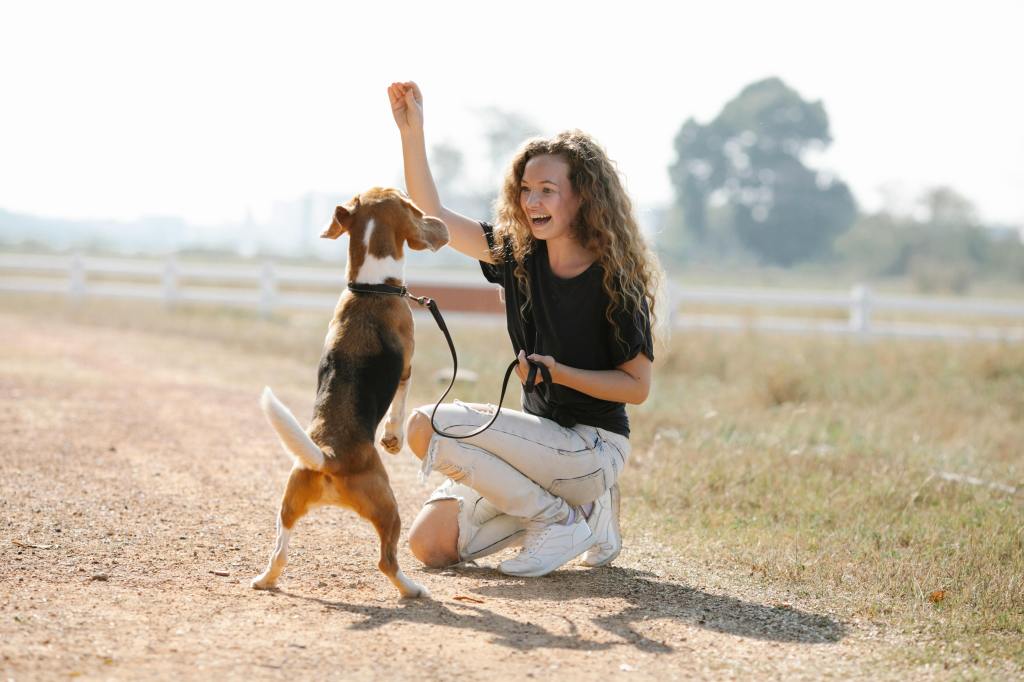
Training Is Context-Specific 🛣️
Dogs learn in pictures, not principles.
When you teach a behaviour at home, your dog isn’t just learning “sit” or “leave it”. They’re learning:
- The room
- The floor surface
- The smells
- The gesture
- The person asking
- Your position
- The general calmness of the space
To your dog, “sit in the kitchen” and “sit on the street outside” are completely different tasks. Even though the cue is the same, the context has changed — and they haven’t yet connected the behaviour to this new situation.
The Same Thing Happens After Training Classes 🏋️
This can be especially confusing for owners who’ve worked with a professional.
A dog may perform beautifully on a training field, in a class, or during one-to-one sessions — then appear to ignore the same cues once back on the street or in the park.
This isn’t because the training didn’t work. Training fields are controlled environments:
- Predictable layout
- Familiar surfaces and smells
- Repeated routines
Your dog learns that this is where certain behaviours apply. Once you leave that environment, the behaviour may not carry over automatically — generalization hasn’t yet occurred.
🤔What Is Generalization?
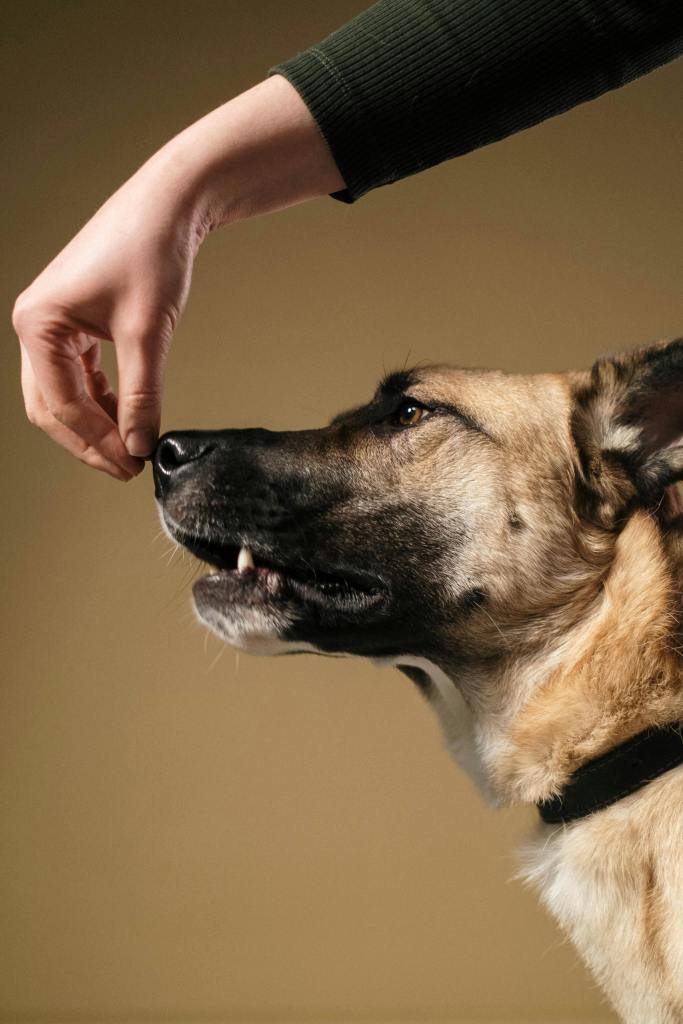
Generalization is one of the most important concepts in dog training – it’s your dog’s ability to take a behaviour learned in one situation and apply it in a new, different situation. For example, sitting at home on a familiar floor and sitting outside on the pavement or at the park are two totally different tasks.
Dogs don’t automatically generalize behaviours. Each new environment is effectively a “new problem” for them, and they need practice linking the behaviour to the cue in that context. Without this step, even a perfectly trained behaviour at home may seem to vanish in a new setting.
🤔How to Generalize Commands
The key to generalization is changing one characteristic at a time. This allows your dog to succeed while gradually applying the behaviour in different situations. Here’s a step-by-step approach:
- Change the person first
- Have a different family member or friend ask your dog to perform the cue.
- Keep everything else the same — the room, your dog’s position, and your movement.
- Change the location gradually
- Once the behaviour works with different people, try the same cue outside, but still with the same person who originally trained it.
- Start in quiet areas, then gradually move to more varied locations.
- Combine changes slowly
- After your dog is reliable with both people and new locations separately, begin combining them: different people asking the cue in different places.
- Always introduce one new variable at a time, so your dog can clearly link the behaviour to the cue.
By breaking the process down, your dog learns that the cue applies regardless of who asks it or where it’s asked, instead of being tied to a single situation.
💡Real-Life Situations Matter More Than Training Fields
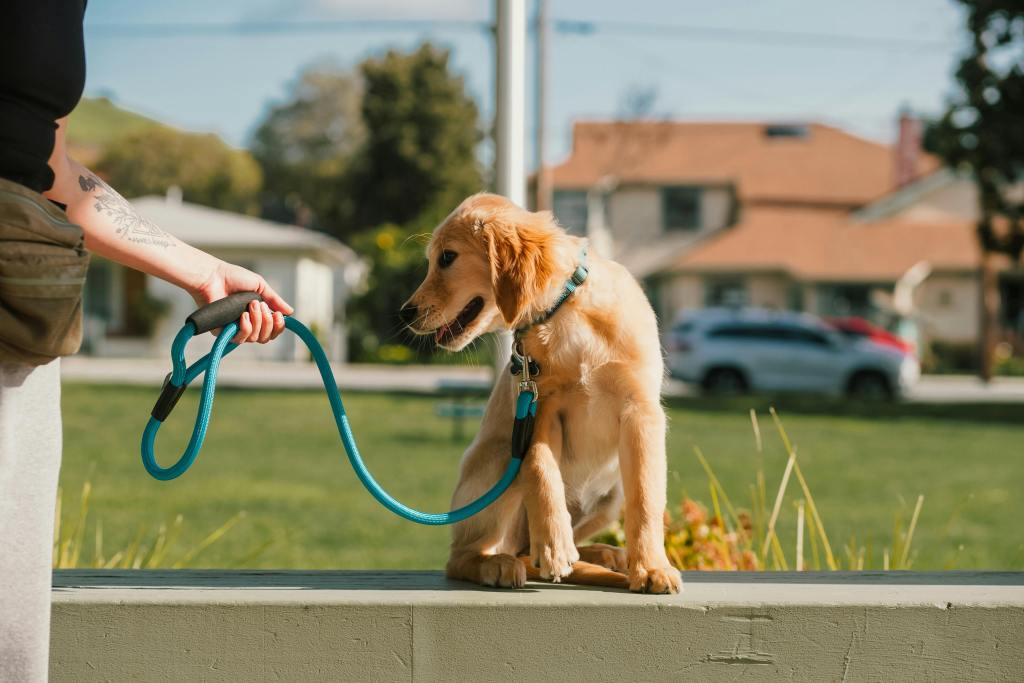
Everyday situations are some of the most valuable learning environments for your dog.
Whether it’s a doorway, a car ride, a friend’s house, a café, a park, or a quiet street, these are the places where your dog actually needs to use the behaviours you’re teaching. Teaching directly in these real-life situations helps your dog learn that these behaviour apply in the context where they’ll be needed.
Training fields or artificial settings can still be useful, particularly for behaviours that are safer to teach initially without distractions — for example, recall. But whenever possible, the fastest and most reliable way to build lasting behaviour is to teach it in the situations where it will be used.
🥰How I Can Help
This is exactly why I don’t use a training field.
I offer one-to-one dog training and structured walks that take place in real-life environments — streets, paths, parks and everyday routines — so behaviours are taught where they actually need to work. This approach helps dogs understand that cues apply everywhere, not just in one familiar spot.
If you’d like help turning “great at home” into “reliable everywhere,” you’re welcome to get in touch to discuss training options.
 Let's Bork